
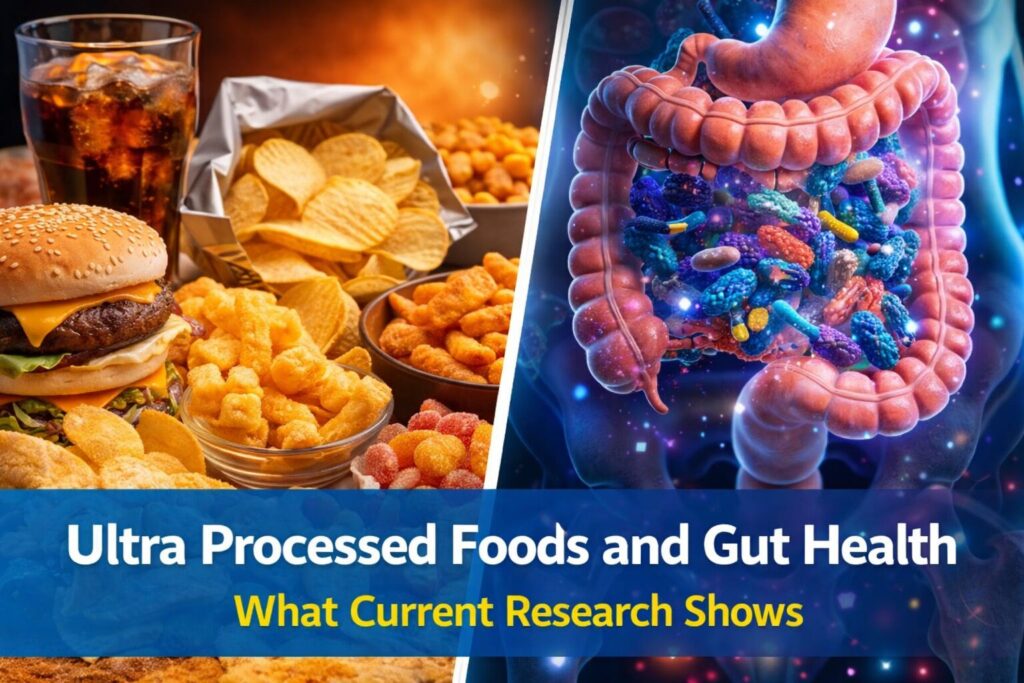
Ultra processed foods and gut health are increasingly being discussed in scientific research. Over the past decade, researchers have examined how dietary patterns influence the gut microbiome and long-term health outcomes.
In recent years, ultra-processed foods have become one of the most discussed topics in nutrition science. From supermarket ready meals to packaged snacks and sweetened beverages, these foods are now a major part of modern diets—especially in the UK.
But what does science actually say about their impact on gut health?
This article takes a balanced, evidence-based look at current research, without exaggeration or fear-based messaging.
Ultra Processed Foods and Gut Health: What Research Shows
The term “ultra-processed foods” (UPFs) comes from the NOVA food classification system developed by researchers at the University of São Paulo.
According to NOVA, ultra-processed foods are industrial formulations made mostly from substances extracted from foods (oils, fats, starches, sugars), derived from food constituents, or synthesized in laboratories. They often contain additives such as flavour enhancers, emulsifiers, colourings, and preservatives.
Examples include:
- Sugary breakfast cereals
- Packaged cakes and pastries
- Instant noodles
- Processed meats
- Soft drinks
- Flavoured crisps
It’s important to note: not all processed foods are harmful. Freezing vegetables or pasteurising milk are also forms of processing. The concern is specifically about ultra-processing and formulation.
Why Is Gut Health Important?
The human gut contains trillions of microorganisms collectively known as the gut microbiota. These microbes:
- Help digest certain fibres
- Produce short-chain fatty acids (like butyrate)
- Support immune function
- Influence metabolic processes
Research published in Nature Reviews Gastroenterology & Hepatology (2020) highlights that gut microbial balance plays a role in inflammation, metabolic health, and even mental well-being.
However, gut health is complex and influenced by many factors: diet, antibiotics, sleep, stress, physical activity, and genetics.
What Does Research Say About Ultra-Processed Foods?
1️⃣ Association With Chronic Disease
A large prospective cohort study from France (NutriNet-Santé study), published in BMJ (2018), found that higher consumption of ultra-processed foods was associated with increased risk of cardiovascular disease.
Another analysis published in The BMJ (2019) linked higher UPF intake with increased all-cause mortality.
It is important to understand that these studies show associations, not direct causation. People who consume more UPFs may also have other lifestyle factors that contribute to risk.
2️⃣ Effects on the Gut Microbiome
Emerging research suggests that certain additives commonly used in ultra-processed foods may influence gut bacteria.
For example:
- A study published in Nature (Chassaing et al., 2015) showed that certain emulsifiers (like carboxymethylcellulose and polysorbate-80) altered gut microbiota composition in mice and promoted low-grade inflammation.
- A 2021 review in Nutrients discussed how low dietary fibre intake—common in ultra-processed diets—can reduce beneficial bacteria that produce short-chain fatty acids.
However, most mechanistic studies are still conducted in animals. Human evidence is growing but remains an active area of research.
3️⃣ Fibre Displacement Effect
One major concern is not just what UPFs contain—but what they replace.
Ultra-processed foods often:
- Contain low fibre
- Are high in refined carbohydrates
- Are low in whole food diversity
The UK Scientific Advisory Committee on Nutrition (SACN) recommends adults consume at least 30g of fibre per day. Most UK adults fall short of this target.
Dietary fibre feeds beneficial gut bacteria. When fibre intake drops, microbial diversity may decline.
Are All Ultra-Processed Foods Equally Problematic?
No.
The NOVA classification is useful, but it does not automatically mean every ultra-processed food is harmful in moderate amounts.
For example:
- Fortified breakfast cereals can provide essential micronutrients.
- Some plant-based alternatives are technically ultra-processed but may still support dietary transitions away from high saturated fat intake.
Context matters.
Total diet pattern is more important than single food items.
What Does a Gut-Friendly Diet Look Like?
Based on current consensus from organisations like the World Health Organization (WHO) and Public Health England, a gut-supportive pattern includes:
- Whole grains
- Fruits and vegetables
- Legumes
- Nuts and seeds
- Fermented foods (like yogurt with live cultures)
- Adequate hydration
The Mediterranean diet pattern, studied extensively in journals such as The Lancet and Circulation, has shown positive associations with gut microbial diversity and reduced inflammation markers.
Practical Steps (Without Extreme Restriction)
If you are concerned about gut health, consider these balanced strategies:
✔ Gradually increase fibre intake
✔ Include at least 5 portions of fruits and vegetables daily
✔ Choose minimally processed options where practical
✔ Read ingredient lists
✔ Maintain regular physical activity
✔ Prioritise sleep and stress management
There is no need for fear or complete elimination of all packaged foods. Sustainability matters.
A Balanced Perspective
Nutrition research evolves constantly.
While observational studies suggest higher ultra-processed food consumption is associated with poorer health outcomes, direct cause-and-effect relationships are still being studied.
The strongest evidence consistently supports:
- Whole food diversity
- Higher fibre intake
- Lower intake of refined sugars and excessive saturated fat
- Overall balanced dietary patterns
Extreme restriction, detox claims, or dramatic “gut reset” products are not supported by robust scientific evidence.
Final Thoughts
Ultra-processed foods are increasingly common in modern diets. Emerging research suggests potential links between high intake and gut microbiome disruption, chronic inflammation, and long-term disease risk.
However, the key takeaway is not panic—it is awareness.
Focusing on dietary quality, fibre intake, and overall lifestyle patterns remains the most evidence-based approach to supporting gut health.
As with any dietary concern, individuals with medical conditions such as inflammatory bowel disease or metabolic disorders should consult a qualified healthcare professional before making major changes.
References
- Srour B. et al. (2018). Ultra-processed food intake and risk of cardiovascular disease. BMJ.
- Schnabel L. et al. (2019). Association between ultra-processed food and mortality. BMJ.
- Chassaing B. et al. (2015). Dietary emulsifiers impact the mouse gut microbiota. Nature.
- Valdes AM. et al. (2018). Role of the gut microbiota in nutrition and health. BMJ.
- SACN (2015). Carbohydrates and Health Report.
- WHO Healthy Diet Fact Sheet (2023 update).