
Acid reflux can feel small at first. A little burning after dinner. A sour taste in the mouth. Burping after meals. A tight feeling in the chest when you lie down.
But when it starts happening again and again, it can disturb your sleep, affect your eating habits, and make you worry about what is going on inside your stomach.
That is why searches like “how to treat acid reflux,” “acid reflux symptoms,” “heartburn,” “stomach acid reflux,” and “acid reflux causes” are rising on Google Trends. People are not just searching for definitions — they want practical answers.
The honest answer is this: acid reflux does not always have one single cause. For many people, it is linked to meal timing, large portions, trigger foods, body weight, alcohol, smoking, stress, sleep position, and daily routine.
This article explains acid reflux in simple language, using reliable public health guidance and recent research, so you can understand what may help and when you should speak with a healthcare professional.

What Is Acid Reflux?
Acid reflux happens when stomach contents move back up into the oesophagus, which is the tube that connects your mouth to your stomach. This backward movement can irritate the lining of the oesophagus and create a burning feeling known as heartburn.
The NHS describes heartburn as a burning feeling in the chest caused by stomach acid travelling up towards the throat. Common reflux symptoms may include a burning chest sensation, sour taste, cough, hiccups, hoarse voice, bad breath, bloating, or feeling sick.
If reflux happens often, it may be called GORD in the UK or GERD in other countries. NICE has official guidance for investigating and managing gastro-oesophageal reflux disease and dyspepsia in adults.
Common Acid Reflux Symptoms
Acid reflux symptoms can be different for each person. Some people mostly notice chest burning, while others feel throat irritation, bloating, burping, or discomfort after food.
Common symptoms may include:
- Burning feeling in the chest after eating
- Sour or bitter taste in the mouth
- Burping or acid coming back up
- Bloating or stomach discomfort
- Feeling sick after meals
- Coughing or hiccups
- Hoarse voice or throat irritation
- Symptoms becoming worse when lying down
- Disturbed sleep because of reflux
A very important point: chest pain should not always be assumed to be reflux. If pain is severe, sudden, spreading to the arm or jaw, or linked with shortness of breath, sweating, or dizziness, seek urgent medical help.
Why Acid Reflux Happens
Acid reflux often happens when the muscle at the bottom of the oesophagus does not close properly. This muscle normally works like a valve. When it relaxes at the wrong time, stomach contents can move upward.
But in real life, reflux is rarely about one thing only. It is usually a combination of habits, triggers, and body factors.
1. Eating Large Meals
Large meals can stretch the stomach and increase pressure. When the stomach is too full, reflux may become more likely.
This is why many people feel worse after heavy dinners, takeaway meals, fried foods, or eating too much at once.
What may help:
- Eat smaller meals
- Avoid overeating at night
- Eat slowly
- Stop before feeling extremely full
Cambridge University Hospitals advises smaller, balanced meals at regular intervals and avoiding late-night eating where possible for people with GORD.
2. Eating Too Close to Bedtime
This is one of the biggest everyday mistakes.
If you eat and then lie down shortly after, gravity is no longer helping keep stomach contents down. This can make reflux worse at night.
The NHS advises people with heartburn and acid reflux not to eat within 3 to 4 hours before going to bed.
A practical routine may look like this:
- Dinner earlier in the evening
- Lighter meal at night
- No heavy snacks before sleep
- Stay upright after eating
This one habit alone may make a noticeable difference for some people.
3. Trigger Foods and Drinks
Not everyone has the same triggers. One person may react to coffee, another to spicy food, and another to fizzy drinks.
Common reflux triggers may include:
- Fried foods
- Fatty meals
- Spicy foods
- Chocolate
- Coffee
- Alcohol
- Fizzy drinks
- Tomato-based sauces
- Citrus foods
- Peppermint or mint products
NICE advises that adults with reflux symptoms should receive simple lifestyle advice, including avoiding known causes associated with symptoms such as smoking, alcohol, coffee, chocolate, fatty foods, and being overweight.
This does not mean you must fear every food. The better approach is to track what affects you personally.
4. Higher Body Weight and Abdominal Pressure
For some people, extra pressure around the abdomen can make reflux symptoms worse. This is why weight management is often included in reflux advice when someone is overweight.
NICE includes healthy eating and weight loss for people who are overweight as part of self-management advice for adults with reflux symptoms.
This does not mean reflux is always caused by weight. Slim people can also get reflux. But if abdominal pressure is part of the problem, gradual weight management may support symptom improvement.
Smart read suggestion
You may also find this helpful
If you are eating less but still not seeing results, this guide explains common weight-loss mistakes and what may help in a realistic way.
Read: Why You’re Not Losing Weight Even When You Eat Less5. Smoking and Alcohol
Smoking and excess alcohol may worsen reflux symptoms in some individuals. The NHS advises people with heartburn and acid reflux not to smoke and not to drink too much alcohol.
If quitting smoking feels difficult, it may help to speak with a pharmacist, GP, or stop-smoking service. Small steps are still progress.
6. Tight Clothing Around the Waist
This sounds simple, but it matters. Tight waistbands or belts can increase pressure around the stomach, especially after meals.
The NHS advises avoiding clothes that are tight around the waist if reflux symptoms are present.
Simple changes:
- Wear looser clothing after meals
- Avoid tight belts after dinner
- Sit upright instead of slumping
Acid Reflux vs Heartburn: What Is the Difference?
These words are often used together, but they do not mean exactly the same thing.
Acid reflux is the movement of stomach contents upward into the oesophagus.
Heartburn is the burning feeling caused by reflux.
GORD/GERD is when reflux becomes frequent, persistent, or troublesome.
So heartburn is a symptom. Acid reflux is the process behind it.
How to Treat Acid Reflux Naturally: What May Help
For mild and occasional reflux, lifestyle changes may help reduce symptoms. These steps are not miracle cures, but they are practical, realistic, and supported by health guidance.
1. Eat Smaller, More Regular Meals
Instead of one large heavy meal, try smaller meals. This may reduce stomach pressure and improve comfort after eating.
Good options may include:
- Oats
- Rice
- Cooked vegetables
- Lean protein
- Soups
- Low-fat yoghurt if tolerated
- Water instead of fizzy drinks
The goal is not to eat less in a stressful way. The goal is to eat in a way that your stomach can handle more comfortably.
2. Stay Upright After Eating
Try not to lie down straight after meals. Staying upright gives your body more time to digest.
You can:
- Sit upright
- Take a gentle walk
- Avoid bending forward
- Avoid lying flat after dinner
Cambridge University Hospitals advises avoiding bending, lifting, or lying down straight after meals.
3. Raise the Head of Your Bed
If reflux is worse at night, raising the head end of the bed may help some people. This works better than simply stacking pillows because pillows may bend the body awkwardly.
Some reflux guidance suggests raising the head end of the bed by about 10 to 20 cm to help reduce reflux during sleep.
4. Find Your Personal Trigger Foods
A simple food diary can be very powerful.
For 7 days, write down:
- What you ate
- Meal timing
- Symptoms
- Sleep quality
- Stress level
- Whether symptoms were worse at night
After one week, you may notice patterns.
For example:
- Coffee may trigger symptoms in the morning
- Fried food may trigger symptoms at night
- Late dinner may disturb sleep
- Fizzy drinks may increase burping
This gives you information instead of guessing.
5. Reduce Heavy Fatty Meals
Fatty meals may slow stomach emptying and increase reflux symptoms in some people. Fried food, creamy sauces, cheese-heavy meals, and large takeaway portions are common triggers.
Try lighter swaps:
- Grilled chicken instead of fried chicken
- Baked fish instead of greasy takeaway
- Boiled potatoes instead of chips
- Cooked vegetables instead of heavy sauces
- Water instead of fizzy drinks
This is not about perfection. It is about reducing the foods that clearly make symptoms worse.
6. Walk After Meals
A gentle walk after meals may support digestion and reduce the habit of lying down immediately.
A 2024 systematic review and meta-analysis published in the Journal of Sport and Health Science found that physical activity was associated with about a 20% lower risk of GERD. The review also noted that meeting recommended physical activity levels may help reduce GERD prevalence.
Another 2024 study reported that higher daily steps were associated with lower GERD risk in older adults, independent of BMI.
You do not need intense exercise after eating. A slow 10–15 minute walk may be enough for many people.
7. Manage Stress and Eating Speed
Stress can affect reflux indirectly. When people are stressed, they may eat faster, drink more coffee, eat late at night, sleep poorly, or overeat after skipping meals.
All of these habits can worsen reflux symptoms.
Try:
- Slower meals
- Deep breathing before eating
- No phone while eating
- A short walk after meals
- Regular sleep timing
Stress management does not cure reflux, but it may support better digestion and better daily habits.
What to Eat When You Have Acid Reflux
There is no perfect reflux diet for everyone. But many people tolerate lighter, less greasy, less spicy meals better.
Foods that may be easier for some people:
- Oats
- Bananas
- Rice
- Potatoes
- Cooked vegetables
- Lean chicken
- Fish
- Lentils if tolerated
- Low-fat yoghurt if tolerated
- Herbal tea without peppermint
- Water
Foods that may trigger reflux in some people:
- Fried food
- Spicy food
- Chocolate
- Coffee
- Alcohol
- Fizzy drinks
- Peppermint
- Tomato sauces
- Citrus fruits
- Heavy late-night meals
Remember: your trigger list should be personal, not copied blindly.
You may also find this helpful
GLP-1 Weight Loss Guide: Safe Use, Diet & Real Results
Learn how GLP-1 weight loss medications work, possible side effects, realistic expectations, and the diet habits that may support healthier long-term results.
Read Full GLP-1 Guide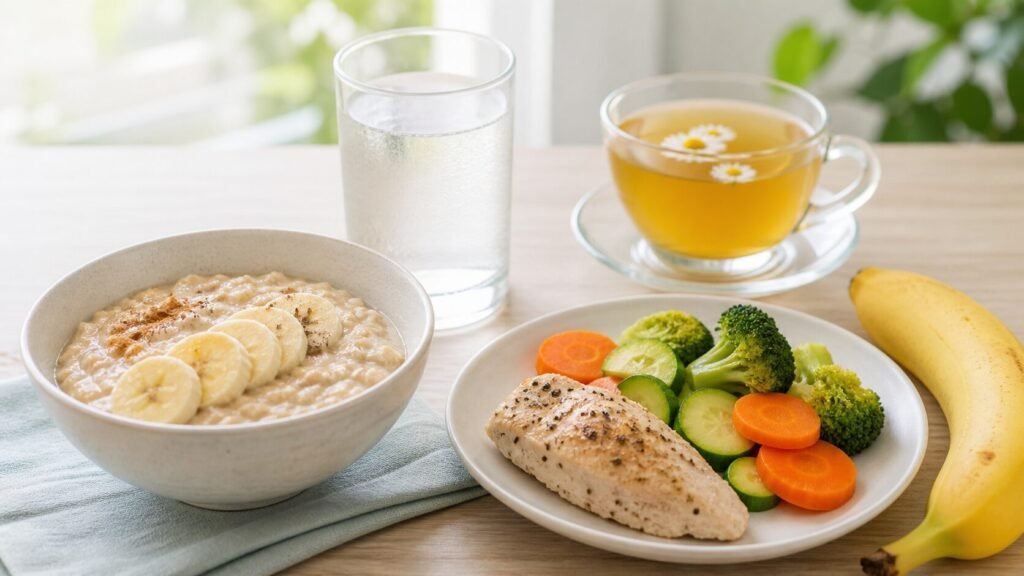
What About Medicines for Acid Reflux?
Some people use antacids, alginates, or acid-reducing medicines. These may help, but they should be used responsibly.
The NHS says pharmacists can advise on medicines for heartburn and acid reflux. It also advises not stopping any prescribed medicine without speaking to a doctor first.
NICE provides official guidance for managing GORD and dyspepsia in adults, including when further assessment or treatment may be needed.
If symptoms are frequent, severe, or not improving, it is better to speak with a GP or pharmacist rather than using medicines again and again without advice.
When Acid Reflux Needs Medical Attention
Speak with a healthcare professional if:
- Symptoms happen most days
- Symptoms disturb sleep
- You have difficulty swallowing
- Food feels stuck
- You vomit often
- You have unexplained weight loss
- Symptoms continue despite lifestyle changes
- You notice black stools or vomiting blood
- You have severe chest pain
These symptoms need proper medical assessment.
Reality Check: What People Get Wrong About Acid Reflux
“Milk will fix acid reflux”
Milk may give temporary relief for some people, but it is not a long-term solution for everyone. Some dairy products may even trigger symptoms in sensitive individuals.
“Only spicy food causes reflux”
Spicy food may trigger reflux for some people, but reflux can also be linked with large meals, late eating, fatty foods, smoking, alcohol, stress, tight clothing, and body weight.
“I need to remove all foods”
Not usually. Most people need trigger awareness, not fear-based eating.
“If symptoms improve, I can ignore reflux forever”
Occasional reflux may not be serious. But frequent reflux should not be ignored, especially if it affects sleep or eating.
Simple 7-Day Acid Reflux Reset
This is not a cure. It is a gentle way to understand your symptoms.
Day 1–2: Track Symptoms
Write down meals, timing, symptoms, sleep, and stress.
Day 3: Fix Dinner Timing
Avoid eating within 3–4 hours before bed.
Day 4: Reduce Fizzy Drinks and Heavy Fried Foods
Notice if symptoms improve.
Day 5: Walk After Dinner
Try a gentle 10–15 minute walk.
Day 6: Avoid Tight Waist Clothing After Meals
Notice if bloating or reflux feels different.
Day 7: Review Patterns
Look at what made symptoms better or worse.
This routine helps you understand your body instead of guessing.
Internal Reading for Majra Health Readers
You may also find these helpful
- Why You’re Not Losing Weight Even When You Eat Less — explains common weight-loss mistakes, metabolism, stress, sleep, and realistic progress.
- GLP-1 Weight Loss Guide: Safe Use, Diet & Real Results — covers GLP-1 medications, safe use, side effects, diet, and long-term expectations.
- Mounjaro Weight Loss Injections in 2026: Are They Safe, Worth It or Just a Trend? — looks at Mounjaro, possible risks, realistic results, and current health guidance.
Trusted External Sources
Trusted Sources & Research References
This article is based on publicly available medical guidance, evidence-based research, and recognised healthcare resources.
- NHS: Heartburn and Acid Reflux
- NICE: Gastro-oesophageal reflux disease and dyspepsia in adults
- Cambridge University Hospitals: Dietary and lifestyle advice for adults with GORD
- Journal of Sport and Health Science: Research on physical activity and GERD
- Frontiers in Sports and Active Living: Studies related to exercise and GERD risk
Final Takeaway
Acid reflux is common, but it can become very uncomfortable when it happens often. The best first step is not panic — it is understanding your triggers.
For many people, symptoms may improve with small but consistent changes:
- Eat smaller meals
- Avoid eating close to bedtime
- Stay upright after meals
- Reduce personal trigger foods
- Manage body weight if needed
- Avoid smoking
- Reduce excess alcohol
- Walk gently after meals
If symptoms are frequent, severe, or affecting your daily life, speak with a healthcare professional.
👉 For more tips visit majrahealth.com
👉 Follow for more wellness content
Disclaimer
This content is for informational purposes only and does not replace medical advice. Always speak with a qualified healthcare professional if you have persistent, severe, or worrying symptoms.
Author
Vipin Sharma is a UK-based Food Technologist and wellness-focused content creator with over 5 years of experience in food safety, nutrition awareness, and quality assurance within regulated food environments. He shares research-backed health insights to help people make informed lifestyle and diet choices.

Vipin Sharma is a UK-based Food Technologist and wellness-focused content creator with over 5 years of experience in food safety, nutrition awareness, and quality assurance within regulated food environments. He shares research-backed health insights to help people make informed lifestyle and diet choices.
His work focuses on translating complex nutrition and health information into simple, practical guidance that can be applied in everyday life. His content is informed by scientific literature, public health guidance, and real-world industry experience.
Vipin promotes a balanced, evidence-based approach to wellness, encouraging sustainable habits and long-term health rather than quick-fix solutions.